Useful before spectacular
Every euro should move the project closer to a concrete, testable, and understandable function.
Independent prototype fund
AI robotics project
I want to raise money so that one day I can build a robot and an AI system able to help public services, nonprofits, and teams working for the public good.
This project starts with a simple ambition: to create technology that does not only impress, but helps. My goal is to gradually build an AI system and a robot that can support useful missions: public information, guidance, administrative assistance, data analysis, technical monitoring, intervention support, and automation of repetitive tasks.
Donations will help the project move forward step by step, without promising a magic result or an official partnership with a public service. The goal is to fund the learning, prototypes, tests, and proofs of concept needed to make this vision credible.
Every euro should move the project closer to a concrete, testable, and understandable function.
The robot and AI must be developed with clear limits, human supervision, and careful data handling.
The project is aimed at uses that can help citizens, nonprofits, communities, and field teams.
Erivan robot design sheets
Explore the design sheets for the chassis, legs, torso, protective shell, arms, and hands planned for the Erivan robot.
01Robot component
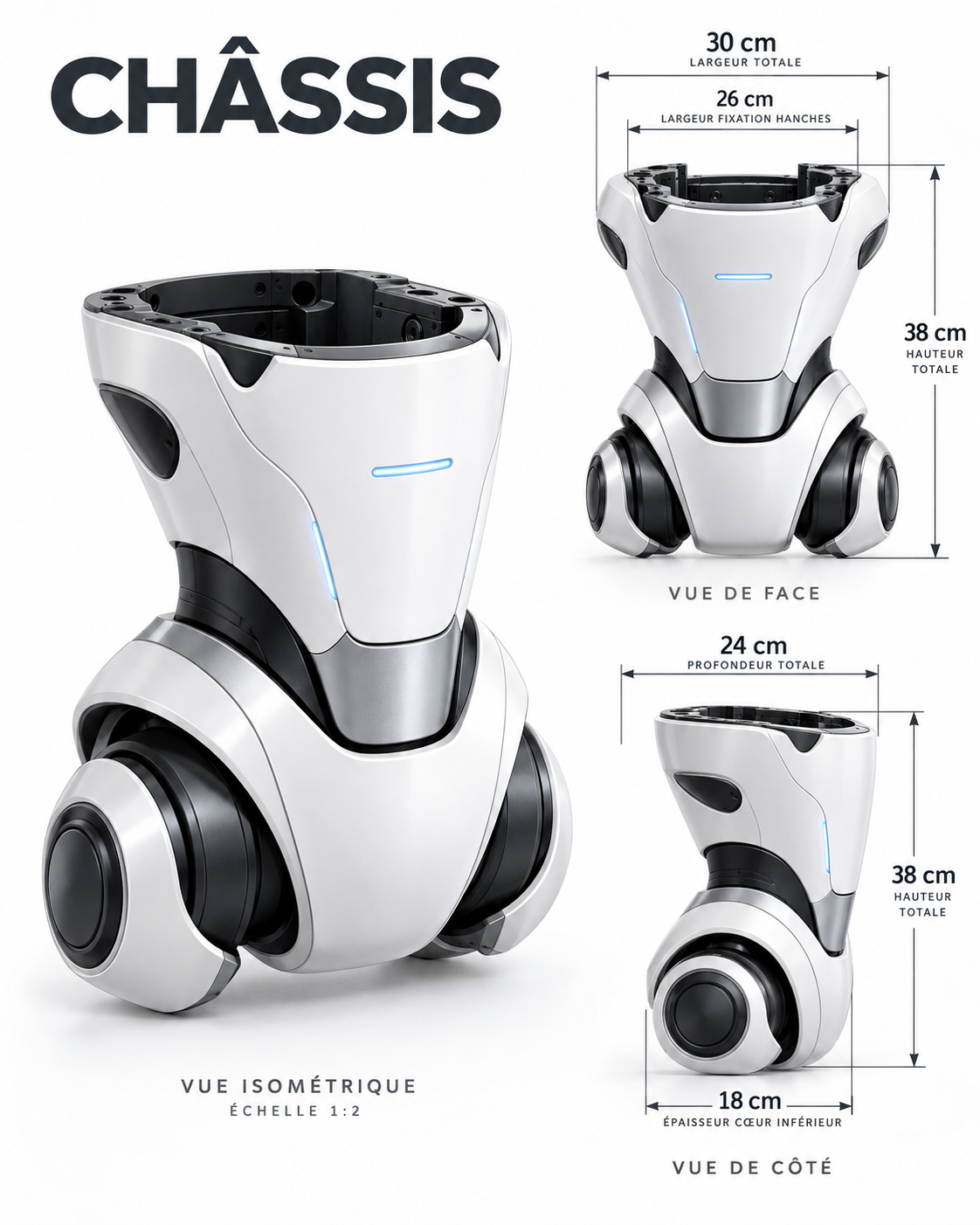
This base drawing shows the chassis from the front and side, including its overall proportions and the mounting points for the upper body.
Drawing dimensions: 30 cm wide · 38 cm high
02Robot component
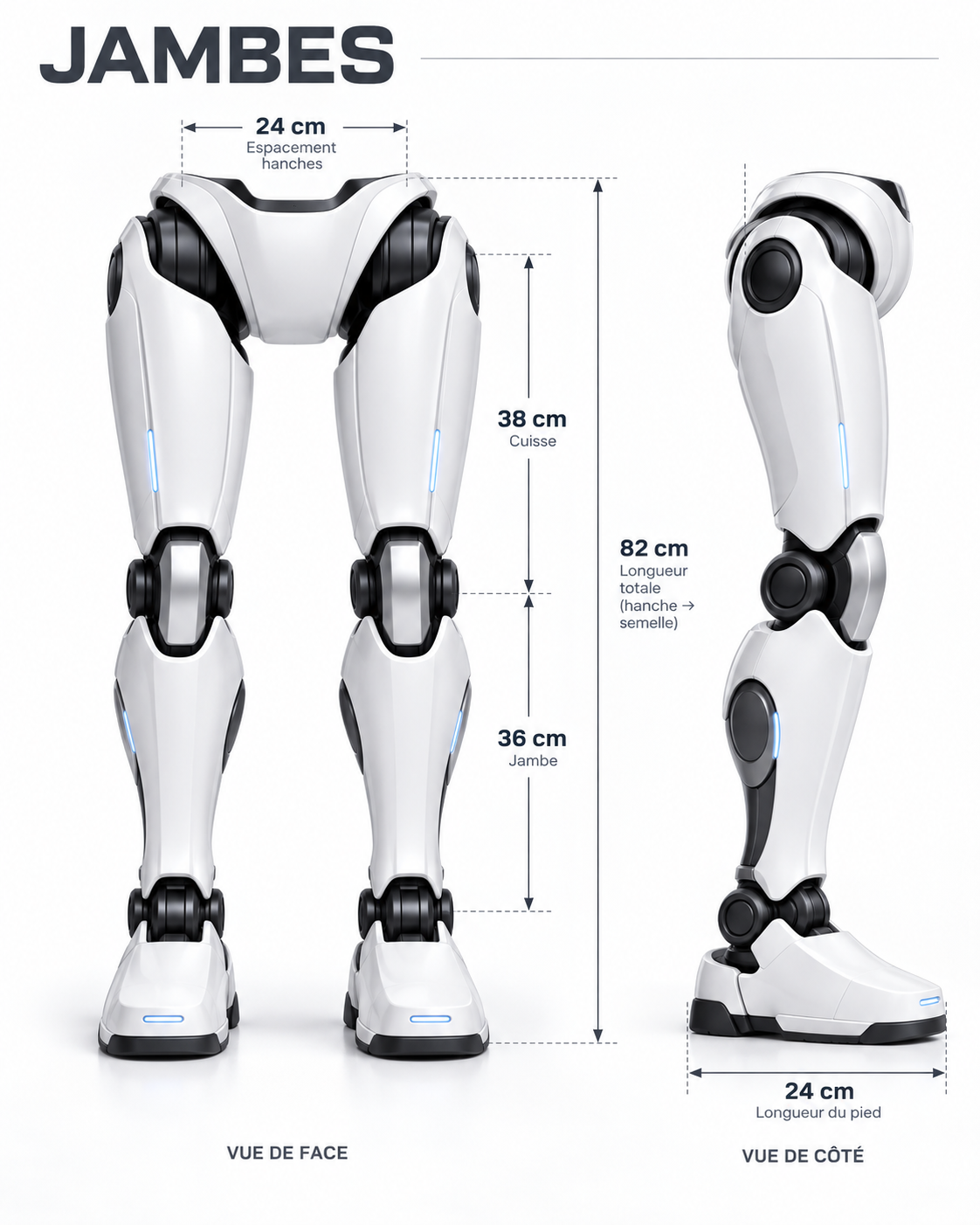
The leg sheet shows both legs from several angles, with the thigh, knee, lower leg, ankle, and foot laid out as separate sections.
Drawing dimensions: 82 cm hip to sole · 38 cm thigh · 36 cm lower leg
03Robot component
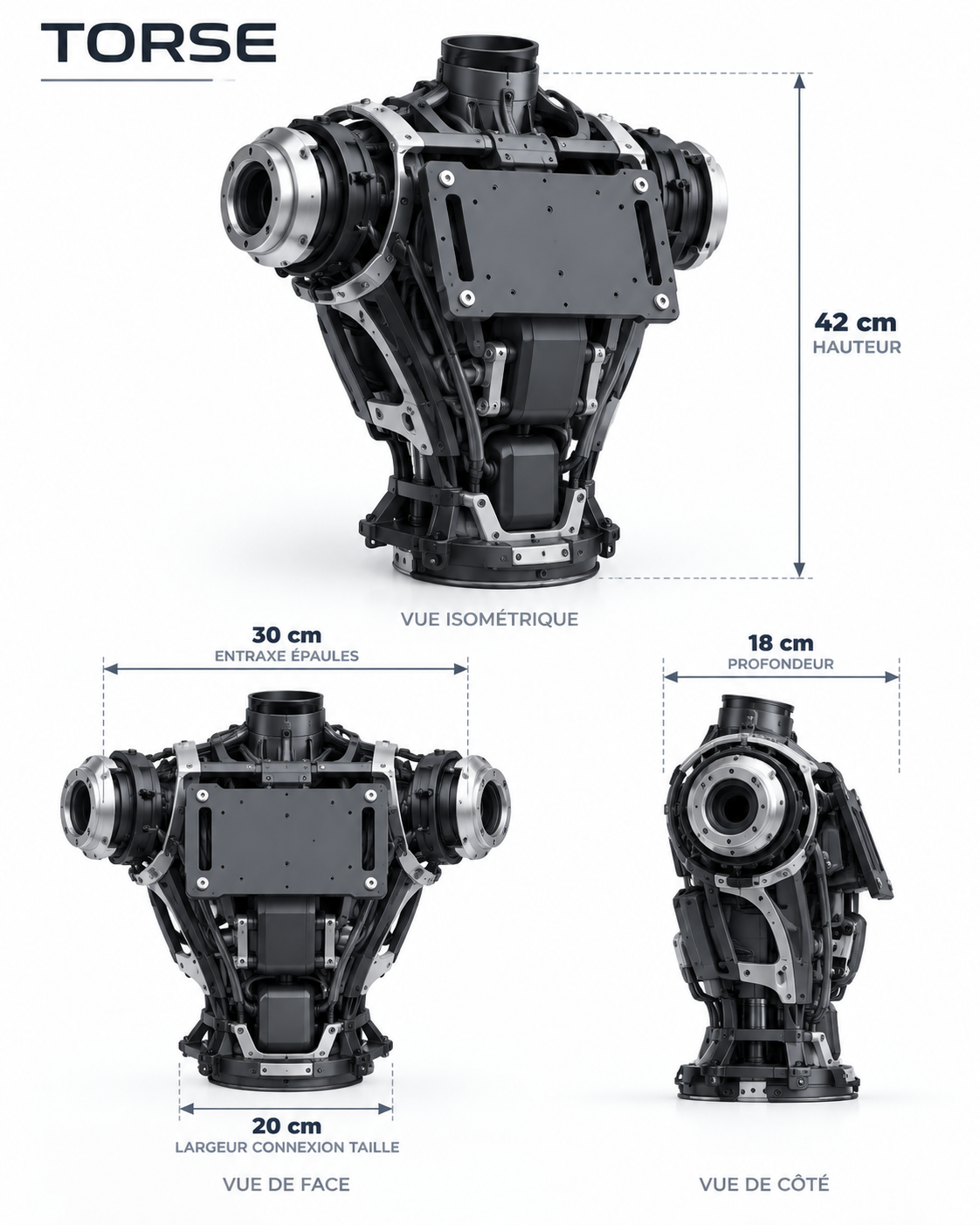
This internal frame connects the upper body to the chassis and places the shoulder joints on either side.
Drawing dimensions: 42 cm high · 30 cm shoulder span · 18 cm deep
04Robot component
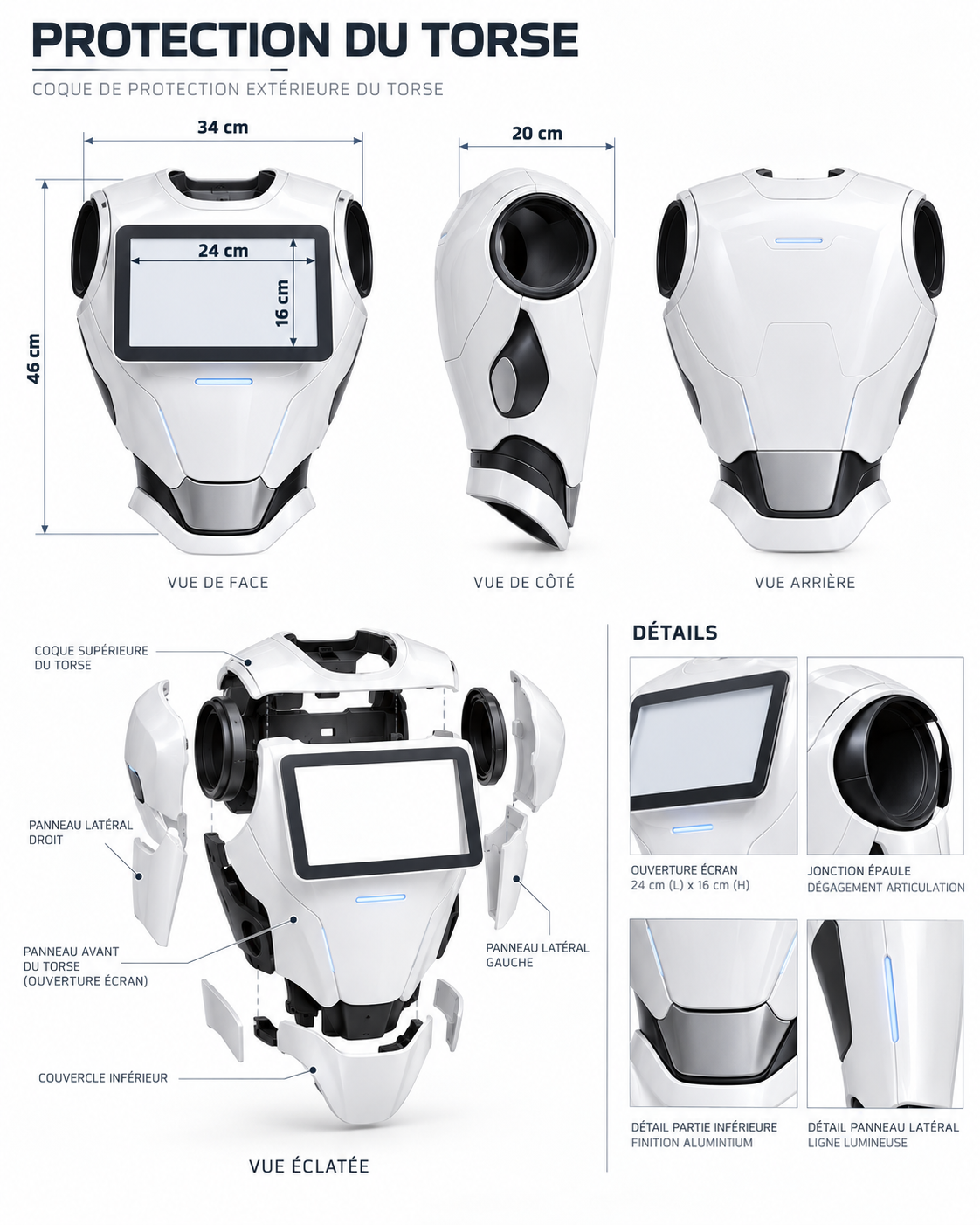
The outer shell covers the torso frame. Front, side, and rear views are paired with an exploded view of its panels.
Drawing dimensions: 46 cm high · 34 cm wide · 20 cm deep
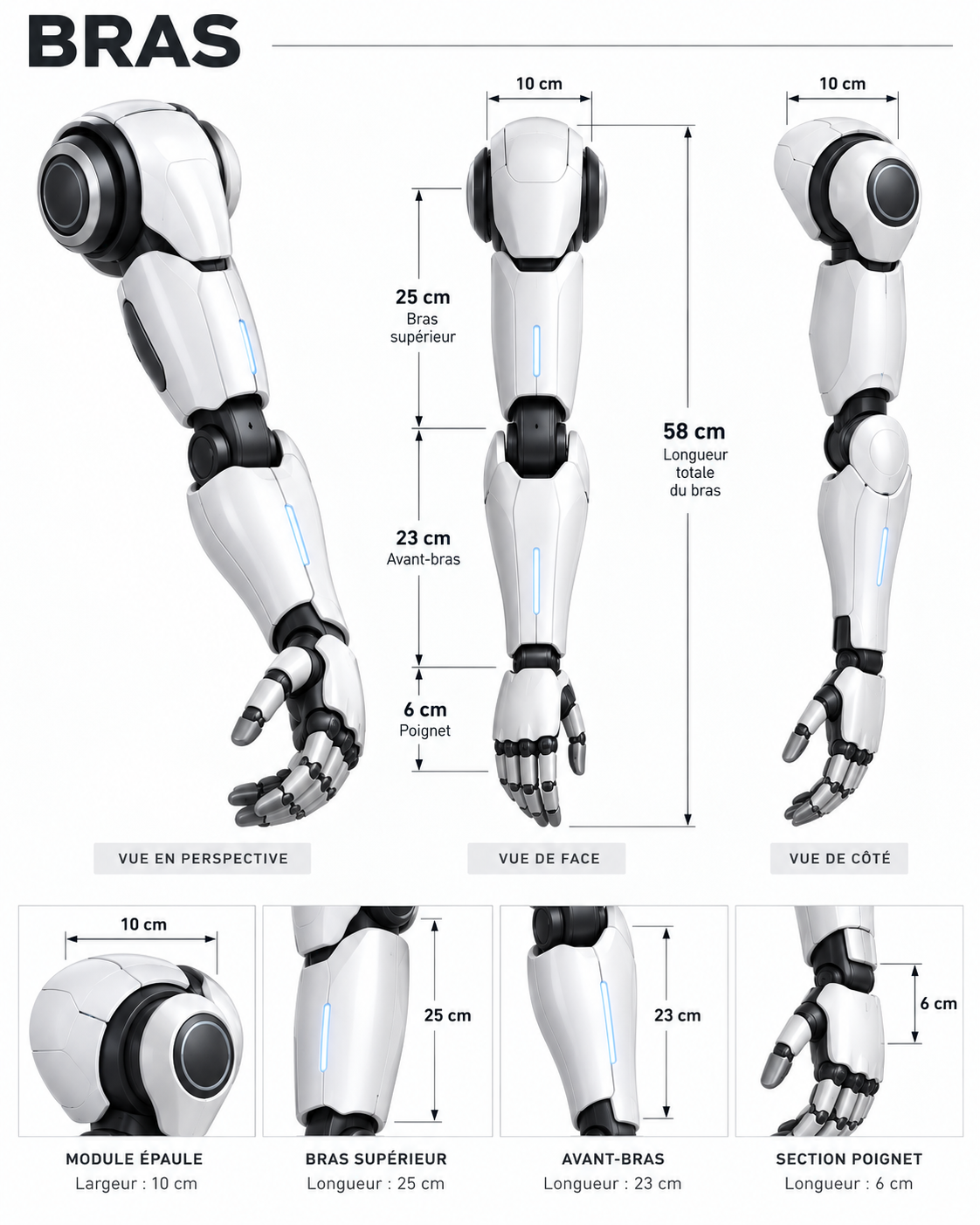
05Robot component
The arm sheet separates the shoulder module, upper arm, forearm, and wrist, and shows the assembly from several angles.
Drawing dimensions: 58 cm overall · 25 cm upper arm · 23 cm forearm
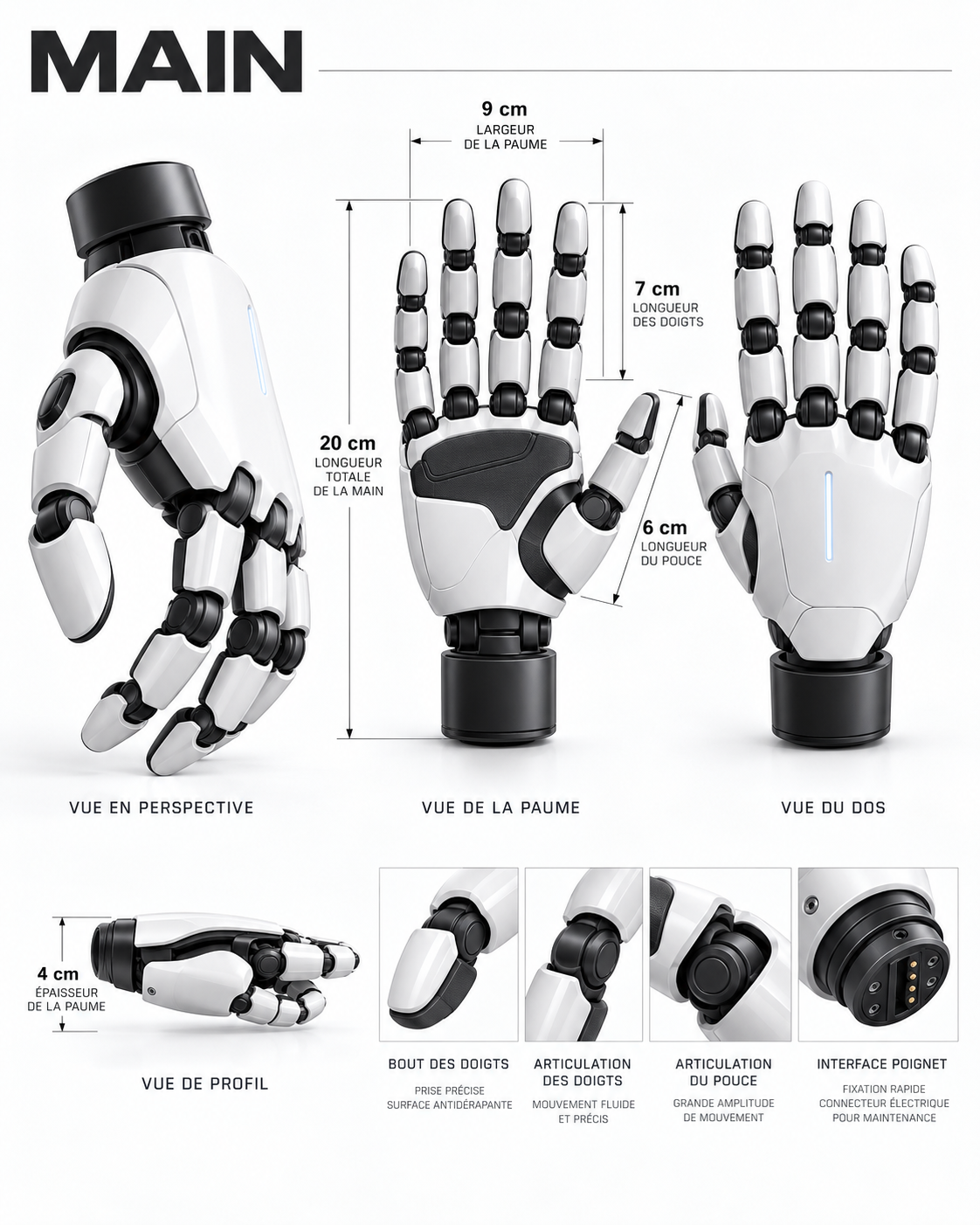
06Robot component
Palm, back, and side views show the segmented fingers, thumb, joints, and wrist connection.
Drawing dimensions: 20 cm overall · 9 cm palm width · 7 cm fingers
What donations fund
Funding helps the project move in stages: software, hardware, prototypes, tests, safety, and documentation.
Conversational agents, reasoning, information retrieval, response evaluation, and assistance tools.
Microcontrollers, motors, batteries, caméras, sensors, 3D printing, châssis parts, and test components.
Prototypes, controlled trials, documentation, error analysis, safety, and continuous improvement.
Servers, APIs, storage, tracking tools, security, and maintenance for the AI platform.
Roadmap
The priority is to prove each stage before moving to the next one.
Improve the existing AI for public assistance: questions, guidance, information retrieval, and clear summaries.
Assemble a first physical platform with vision, sensors, motor control, and simple interaction.
Test public-interest scenarios: reception, assistance, inspection, data collection, and support for teams.
Other ways to help
You can also share the project, suggest hardware, propose a public-interest use case, or test the AI space and send concrete feedback.